
Field Notes
The ChatGPT Moment in Humanoid Robotics
It’s become fashionable to try to find the next AI beneficiary and bid up stocks way ahead of actual demand.
The thing a lot of people JUST experienced was this:
- ChatGPT released in Nov 2022.
- Nvidia went up in a straight line to do a 10x for two years straight.
- Boom, it’s the most valuable company in the world because of AI.
A couple of things about this, though: most importantly, fall 2022 was the stone bottom on tech stocks after the 2021 bubble sold off. And second, the timing depends on whether you are looking at fiscal-year summaries or calendar-time quarters. Nvidia revenue was basically flat from FY2022 to FY2023, but the real data center inflection became visible with the May 2023 guidance shock, and then the second half of calendar 2023 exploded. So the stock still moved before the revenue inflection was fully obvious, but more like six months early than a clean full year early.
So mechanically:
- ChatGPT moment.
- Stock starts to move immediately.
- The May 2023 guidance shock reveals the revenue inflection.
- The market (somewhat) front-ran the whole thing by months.
This dynamic presents a problem: people are now claiming everything is the next big thing and trying to front-run it (before revenues show up), so you can be dangerously wrong and hit an air pocket.
Photonics situation
Photonics companies have all had Nvidia-like runs lately, and the growth is real. Lumentum’s last reported quarter was up about 90% year over year, and its June-quarter guide is close to $1B of revenue. That is absolutely Nvidia-like growth.
Example: $LITE (Lumentum). The idea is that they may become a big player in co-packaged optics (CPO), which is embedding fiber-optic-based communication capabilities directly into GPUs. This would be faster than copper, which is hitting limits.
The rub is valuation versus proof. The stock is already pricing in a lot of future success, but the current explosive growth is more transceivers / optical circuit switches / AI datacenter networking than the full CPO thesis paying off yet. So this is not a simple trade like this: ChatGPT happened; buy Nvidia because they need GPUs to train AI.
You are also betting that CPO is adopted as a technology and they get it working. Right now, copper is way cheaper and simpler (more reliable). So why would you implement CPO in chips if you don’t absolutely need it and you are not even confident it will work well?
Well, you might not. In fact, that’s what SemiAnalysis and others have said (link to another reference because SemiAnalysis is not public).
As of this July 2026 draft, $LITE is down roughly 30% off the peak and other smaller photonics companies have fallen further. That number will move around, but the point is that a lot was already priced in.
The other thing to remember is that these all 10x’d in a year or less, basically on speculation that a new unproven technology would be adopted and that current growth would prove durable. Risky.
I have mostly sat photonics out.
Memory
I will contrast this briefly to memory and storage: NAND, DRAM, and HDD makers are all supply constrained, and demand has skyrocketed. The technology to make these so-called commodities is complex, and the fabs take years to build. Therefore, it’s hard to simply make more DRAM in the explosive quantities desired.
This is very different: we got extremely clear supply / demand signals in 2025, and then DRAM spot prices started to rise precipitously in late 2025. I bought a lot of these stocks in late 2025 after they had already done 100% and 200% moves because the price signals were extremely clear.
Not a speculative new technology, prices you can track that read through to revenue the next quarter.
See the difference?
Humanoids
The next thing to address is humanoids.
I have seen “ChatGPT moment for robotics” and “ChatGPT moment for humanoid robotics” repeated a lot lately on X.
But can you call it that if it hasn’t happened yet?
It’s a different bet: it’s buying before the actual signal, rather than after.
And now people are buying BEFORE anything has happened. All we have when it comes to humanoid robotics are demos. We don’t have much production yet, and we don’t have them in the hands of people visible to the public yet, or even really doing anything major in private industry as far as I can tell.
I see a lot of “partnerships” with automakers, but is anybody shipping these at mass volume and low cost yet? I don’t see the equivalent of the $20-a-month subscription that does amazing writing and research work that we obviously got with ChatGPT to make this totally analogous.
Will Humanoids be different?
The next question is if the analogy even works: ChatGPT was, after all, an information product, which is easier to scale than something that requires physical manufacturing.
So the ChatGPT moment in robotics must necessarily look different: the actual signal will still need to come well in advance of penetration because you cannot simply mass-scale robot manufacturing overnight. These are supply chains that will be as complex as building automobiles.
Automobiles bring me to another point we must address: are robots even going to be a good high-margin business like selling chips? Because surely cars are not, and almost no automaker worldwide consistently has good growth and great profit margins today. It’s extremely complicated to build cars profitably, and few manage to do it consistently.
Will building robots be a bad business like cars? If they are bad businesses, every supplier will get their margins squeezed, and competition at the platform level will also be severe.
Humanoid Robot Investability
Next question: can you even invest in these? Basically, not that well right now. Publicly speaking, the pure-play humanoid robot makers are:
- Tesla - but it’s diluted by owning a car company and Optimus is zero revenue today.
- $BOT - Robostrategy: a fund selling claims on private companies at like 500% to NAV with high fees. Good luck lol. The private companies are hilariously overvalued too, btw.
- $CCXI - Agility Robotics SPAC. We know nothing about this. Is it a good deal? Who knows lol.
- Rainbow Robotics - $277810.KQ - it’s a Korean company with a partnership with Samsung trading at like 300x sales. Good luck!
- Humanis - $108490.KQ - another Korean company, more edtech + components side. But also trading at 90x sales!
- Chinese companies - Unitree may go public soon. Can you own this as an American? It will probably get restricted because of PLA ties or something.
OK, so pure plays are looking a little iffy!
How about this: can you buy the component makers? Actually, yes. And everyone knew about this for more than a year now because Citrini wrote a big article on it and explained it extremely clearly:
Actuators are like 40% of the BOM.
But, when it comes to components: the vast majority of these companies are Chinese, and for Western companies the competition with the Chinese players is brutal because the Chinese manufacturing economy is so efficient that its firms can basically always compete on price, so the lowest-priced parts in the world for simple actuators, motors, sensors, etc. are ALWAYS going to come from mainland China.
As an American citizen, it’s hard to invest in these companies for a bunch of reasons we can skip here, but just beyond that, they also compete brutally with each other and drive prices down among themselves. So should you invest in them? Again, these are not businesses with great margins. They are making small motors.
There is one Japanese company I remember looking at a year ago: Harmonic Drive Systems Inc. (6324.T) - it makes the kind of actuators you would use in the hips of humanoid robots. But primarily, it is a car company supplier. So I remember thinking, OK, it’s basically making car components and the auto industry is stagnant, but the robot demand hasn’t really shown up yet. I passed on this at 2,500 yen a share.
Well, anyway, Harmonic Drive Systems is 8,840 yen a share now. But why? Revenue was up like 20% last quarter, but was it because of humanoid robots? Maybe a tiny bit; yeah, they talk about it. But basically it was because of a recovery in Japanese automakers.
So is this just getting bid up because when you ask about actuators ChatGPT tells you about it? I suspect that is true.
Waiting for Humanoids
Humanoids are pretty hard right now:
- No really clean public exposure
- No clear breakout success yet
- It’s not really clear when massive demand will actually come
Let me be super clear: I think it’s very likely all the public expressions of this trade are going to form a bubble over the next year or two and then crash and then we will have another period like 2022-2023 where you can buy the proverbial Rocket Lab for $4. They will be lying on the ground in pieces and you will be able to scoop them up carefully into your bags.
It will be hard; you will have to have courage and you will have to have cash. But it will be easier than trading Rainbow Robotics on the schizophrenic KOSPI exchange at 300x sales.
Second-order investments: humanoid impacts
Oftentimes in technology investing it seems that the simplest answer is the best and safest.
In the case of robotics, that is simply that robots also need semiconductors and memory! And even if humanoid demand never shows up or it’s delayed, we absolutely know we still have general AI demand from all other AI applications to support demand here.
In fact, if you are training world models with a bunch of multimodal sensor data from lidar, camera, force sensors, gyros, etc., you need orders of magnitude more storage space to persist this data and train on it.
To me, that means you just keep making the same trade for AI: long memory, storage, and GPUs. It might be that simple! Micron is still trading below 10 on a forward P/E basis, and prices are still rising!
Yes, btw, there are some other interesting things I’m researching like BlackBerry’s QNX operating system as a way to get robotics upside exposure, but I’m being cautious about it here. Valuations are getting stretched in the more forward-looking ideas.
The clean signals we are waiting for with humanoids
A good signal is a price (or value measurement), not a narrative; it’s public, and it’s not easy to fake because it has real volume. This is what was clean about DRAM spot prices rising.
Oh, one other important thing: DRAM prices were structurally deflationary for decades until last year. That’s a massive departure from the trend, so it was a very powerful signal.
So the equivalent signal is precision components. In fact, Fable helped me come up with a specific thing to watch:
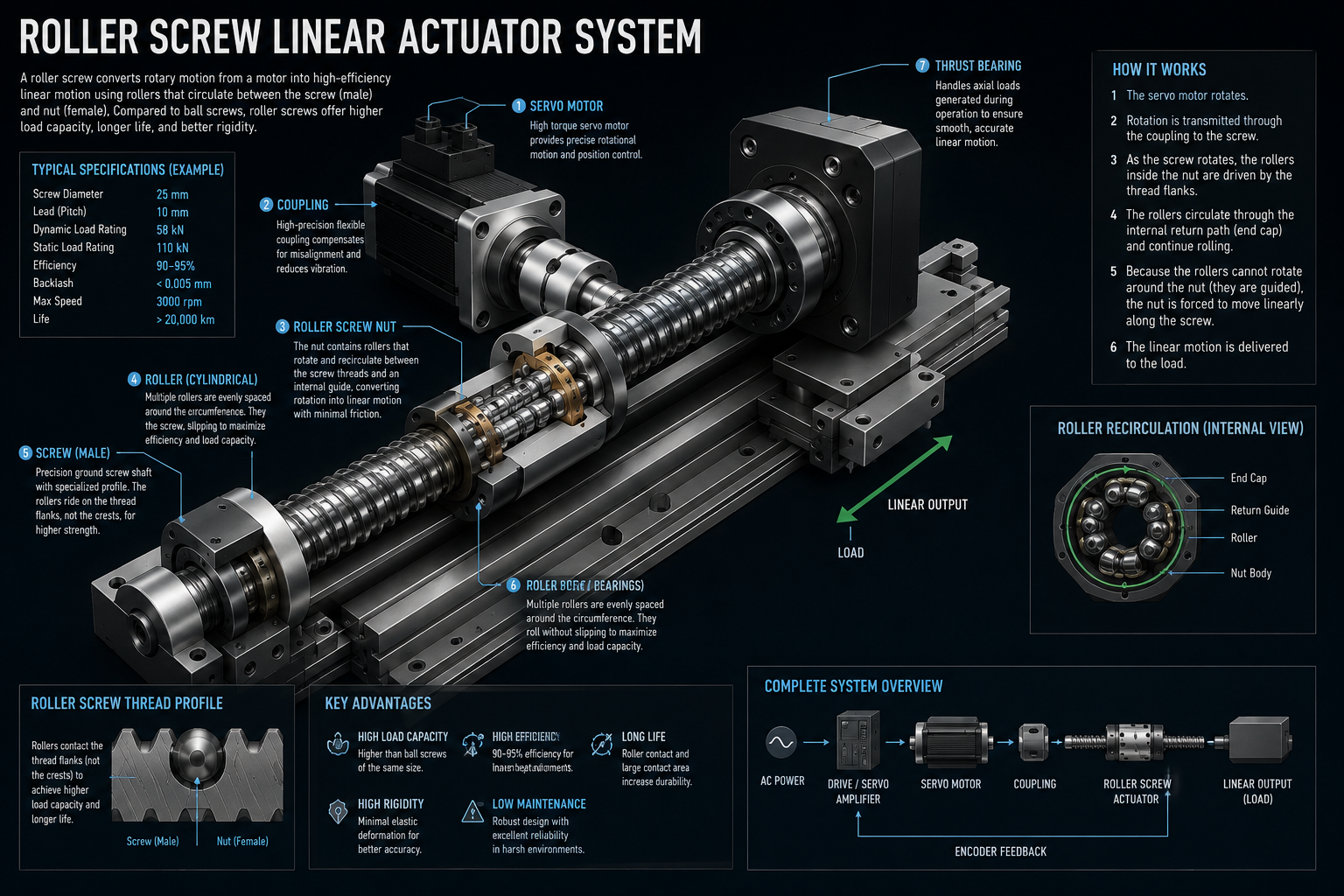
If reducer or roller-screw lead times stretch past 12 months, demand has outrun a supply chain that can’t respond for years. That’s your DRAM spot moment.
More specifically:
Where to actually see it: Harmonic Drive discloses orders received quarterly (backlog inflection, not revenue — orders lead revenue by 2-3 quarters), and JMTBA publishes Japanese machine tool orders monthly, so you can watch demand for the grinding machines that make the reducers. That’s a public, monthly, unfakeable series one level upstream of the hype.
Another thing Fable came up with was “reorders, not orders.” Example: Figure has 40 humanoids deployed at the BMW Spartanburg plant. If BMW reorders and this time orders 400 humanoids, well, then holy shit, something is working well. Until then it’s a science project.
And lastly, we want to see robot $/hr economics holding steady or rising. Figure said it’s “billing around $25 per robot-operating-hour,” so we want to see that number hold steady or rise to see that robots are actually economically valuable. For other companies, it can be lower, but it should still imply a good ratio versus the payback cost of the unit to manufacture and operate.
To boil this down, we need to see:
- Components signal: lead times stretching to 12 months or more.
- Consistent reorders of more robots (a signal it’s working).
- Good and steady hourly wage/unit economics for robot workers.
Elephant in the room - the missing ingredient…
You have to build an accurate model of reality to have a chance at predicting the future. What we can attempt to do here is model the humanoid tech takeoff versus what it looked like for LLMs right before ChatGPT. We can model by analogy here since, in many ways, this is a similar domain space.
We had GPT-3 and it worked for several years. What was missing: a good interface and some RLHF to make the model respond consistently.
What were the preconditions for GPT-3? Transformers, scaling laws working, and a huge corpus of available data to train on.
Ah, that last one…
We are missing the data for humanoid robots. And it’s not a small thing to gloss over.
You cannot actually get the data unless you have humanoids deployed to collect it. But then - how closely does the data have to match the hardware? Do you need the exact visual data + the force sensor data + other physical data? What if you change the hardware configuration slightly for your next version: does all the data become worthless? Can we figure out ways to simulate all of this? Maybe a model can learn physics from passive video training, but probably not, right?
Is there even a single finish line? Are we 5 years away on several fronts that all have to line up simultaneously?
Conclusion
Robotics + AI is probably still too early in real ways now! I have a disturbing gut feeling this is going to be like 3D printing: I saw a lot of people start companies in 2014 only to be crushed by physical reality 2 years later and run out of money. Right now, in 2026, 3D printing is amazing: it’s cheap, and we have consumer-ready Apple-like products that just work (Bambu Lab & Creality), and every time I go to Micro Center, I see people buy filament. 3D printer shipments rose dramatically year over year, and anecdotally, many people I know own them and use them frequently for household repairs and projects.
But good consumer 3D printing took 10 years from the initial hype cycle…
It just seems to me like there is a very good chance we are missing some key technical ingredients for humanoid robots to scale up to reliable usefulness quickly from our present point in time. And if you blow this timeline as an investor, you probably lose every dollar you put in, since the base state of every non-viable tech venture that depends on a missing technical challenge being solved is cash burn until bankruptcy.
And anyway, pure-play public robotics exposure appears too hard now.
The easiest expression is the same as the AI trade in general: semiconductors.
There will be a time when I think we can buy into robotics cheaper and with more clarity, and it will be scary and difficult to do so, just like it was in 2022.
This is not financial advice, just what I’m personally doing and thinking for your entertainment only.